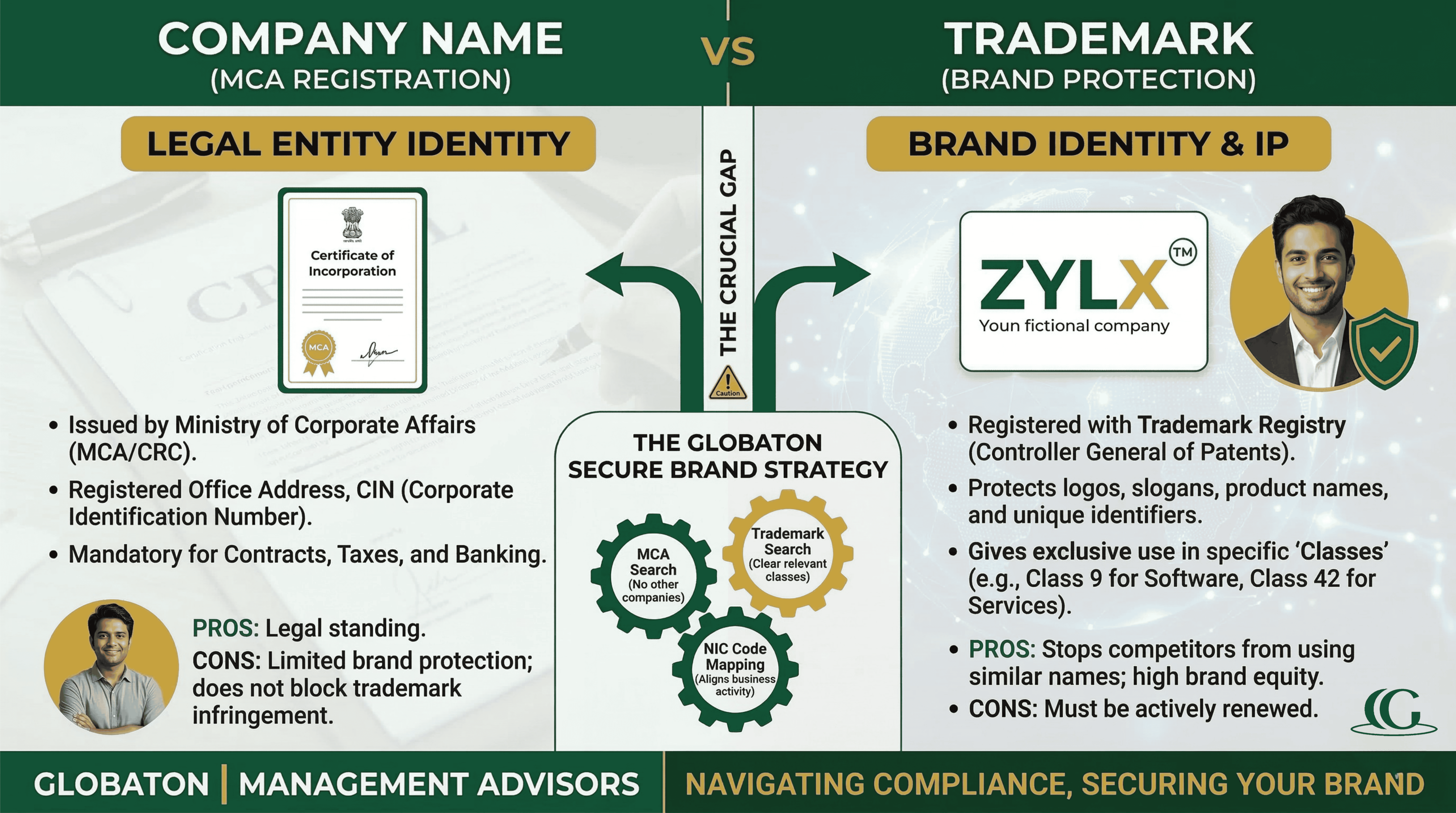
The Hidden Conflict: Trademark vs. Company Name
One of the most common misconceptions we encounter is the belief that getting a company name approved by the Ministry of Corporate Affairs (MCA) automatically grants you the right to use that name as a brand. In reality, a company name and a trademark are two very different legal assets. Understanding the gap between them is the difference between building a secure brand and facing a legal notice just months after your launch.
The Registration Gap: Why MCA Approval Isn't Enough?
When you register a company, the Central Registration Centre (CRC) checks if your name is available in the corporate database. However, their primary focus is ensuring your name doesn't mimic another company. They do not always perform a cross-exhaustive check of the Trademark Registry.
Imagine a founder who successfully incorporates "Blue Horizon Consulting Private Limited." They spend months on branding, website SEO, and signage. Suddenly, they receive a cease-and-desist letter from a firm that owns the "Blue Horizon" trademark in the consulting category. Even though the government approved your company name, the trademark owner has the legal power to stop you from using it commercially.
Why Your NIC Code is the Bridge?
When you apply for a company name, you must select a National Industrial Classification (NIC) code. This code defines your business activity. To secure your brand, this code must align with the appropriate Trademark Class.
For instance, if you are starting a software company, your NIC code must correspond to searches in Trademark Class 9 (software products) and Class 42 (software services). If your proposed company name conflicts with a registered trademark in those specific classes, the CRC is authorized to reject your application, even if no other company has that exact name.
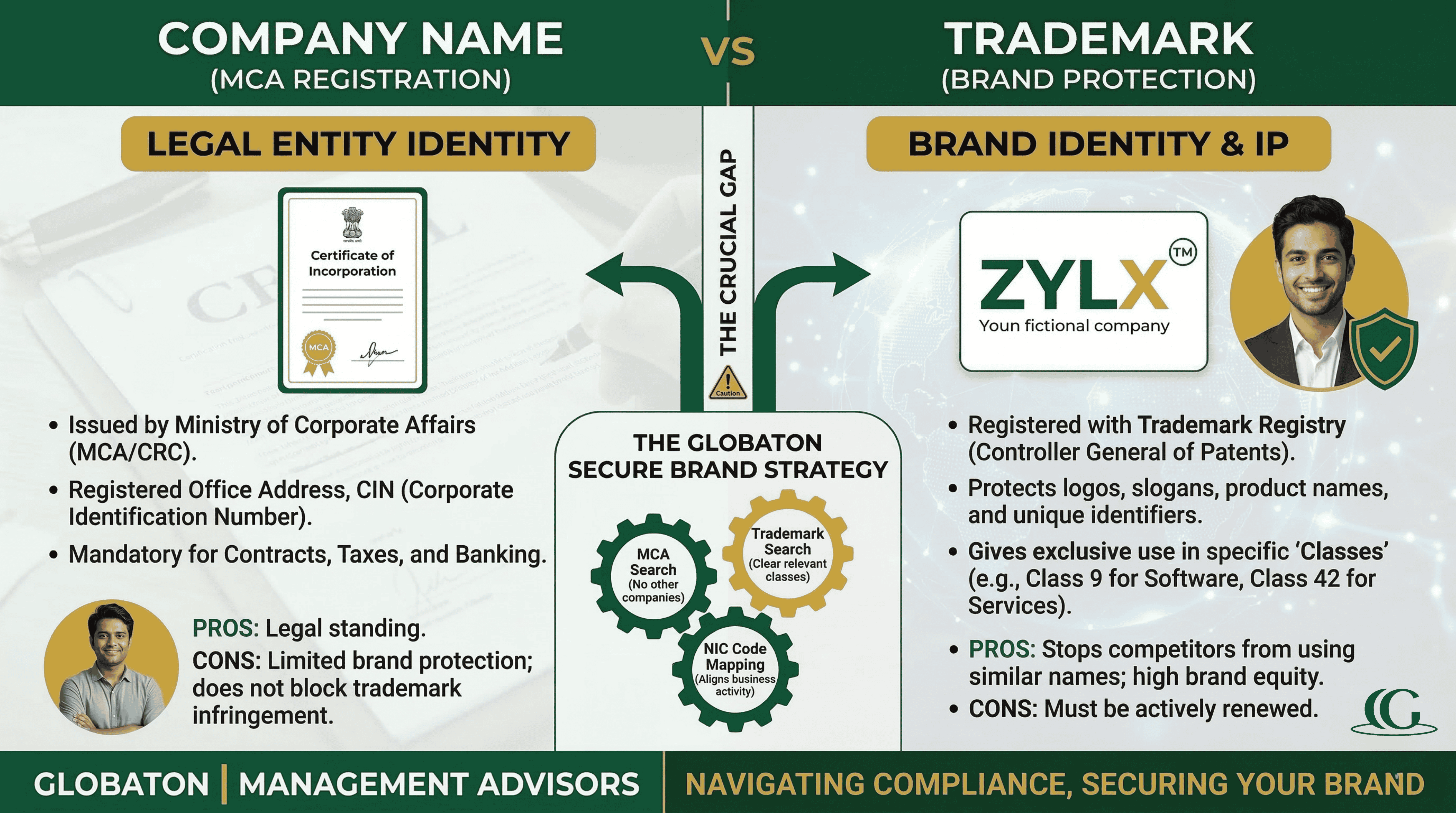
A Tale of Two Authorities
The conflict arises because two different bodies manage these registrations:
MCA / CRC: Manages legal entity names (your "Official" name for taxes and contracts).
Trademark Registry: Manages brand protection (your "Public" identity, logos, and taglines).
Because these databases are independent, the burden of "due diligence" falls entirely on the founder. Ignoring the trademark search risks a total brand overhaul later, which involves changing your CIN, PAN, GST, and all bank records—a logistical nightmare for any startup.
Visualizing the Difference
Feature | Company Name (MCA) | Trademark (IP India) |
Purpose | Legal Identity for Contracts/Taxes | Brand Protection for Public Presence |
Authority | Ministry of Corporate Affairs | Controller General of Patents |
Protection | Stops others from using the legal name | Stops others from using the logo/brand |
A Founder’s Checklist for a Secure Identity
To avoid the "Registration Gap," we recommend this strategic approach:
The Dual-Search Strategy: Never check the MCA portal in isolation. Always run a parallel search on the IP India public search portal.
Prioritize "Coined" Words: Distinctive, invented words (like Zomato or Globaton) are easier to clear in both databases than descriptive words like "Quality" or "Global."
Check the Domain First: A domain is cheap, but a legal battle is not. Ensure your .com or .in is available and doesn't infringe on existing marks before filing your papers.
At Globaton, we help founders bridge this gap by conducting comprehensive dual searches before filing a single piece of paperwork. Your business identity is too valuable to leave to chance.
Frequently Asked Questions
Can I use my company name as my brand name without a trademark?
You can, but it is risky. Without a trademark, you lack exclusive rights. A competitor could register the trademark and legally force you to stop using your company name in your marketing.
What happens if my company name is approved but the trademark is rejected?
You can keep the legal company name for contracts, but you will likely need to create a different "trading name" or brand for public-facing business to avoid infringement.
What are Trademark Classes?
The Registry divides all goods and services into 45 classes. You must ensure your name is clear in the class that corresponds to your NIC code or business activity.
Is an MCA name search enough for incorporation?
No. Official advisories recommend checking the trademark database. If a name "too nearly resembles" a registered trademark, the CRC can reject your incorporation application.
How does Globaton help?
We provide end-to-end services to ensure your legal entity name and brand identity are perfectly aligned, conducting the necessary searches to avoid rejections and future litigation.