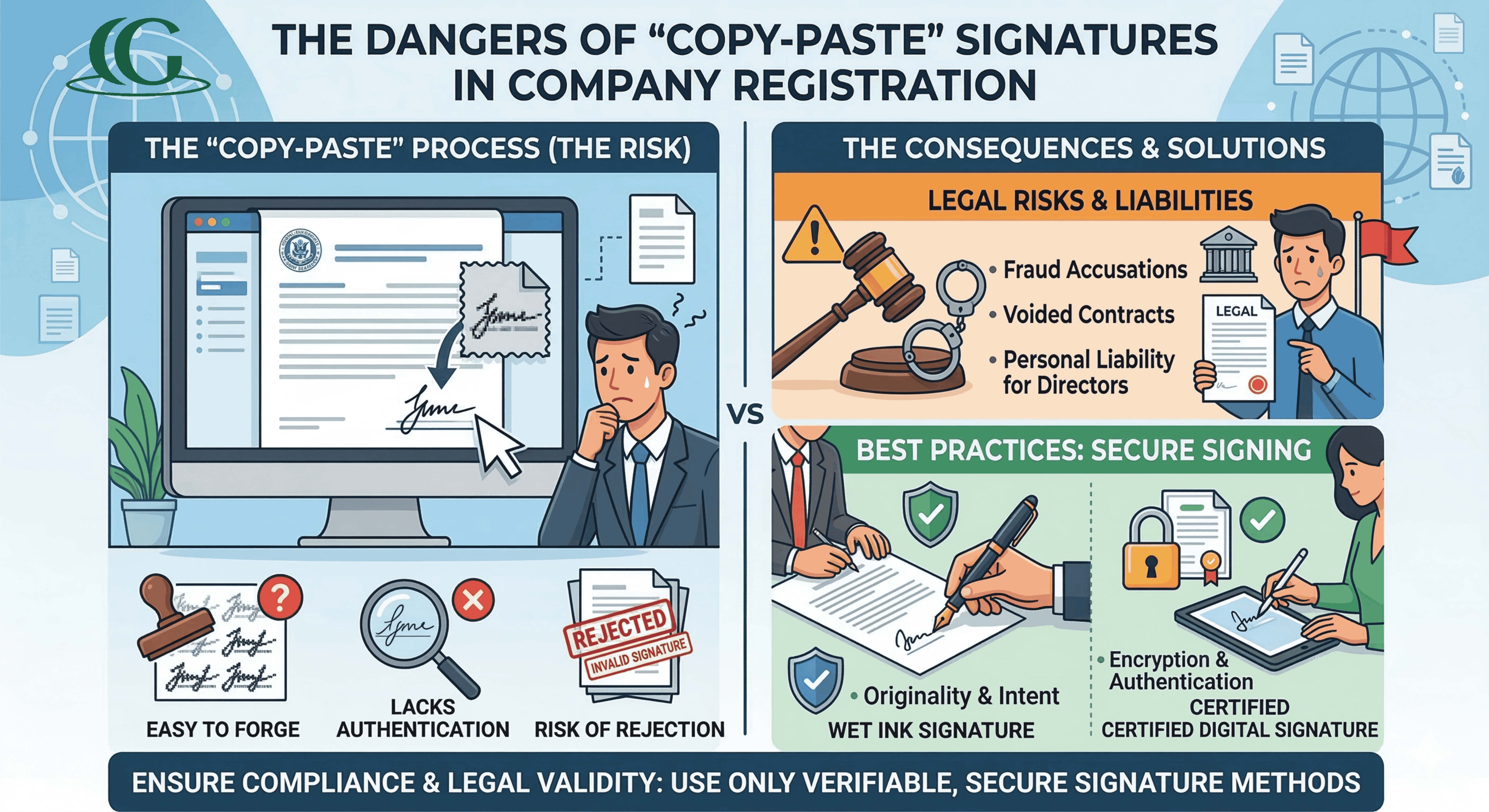
In the fast paced world of digital transformation, it is tempting to look for shortcuts. When you are incorporating a company and dealing with dozens of forms, the idea of simply cropping a signature from one document and pasting it onto another might seem like a harmless time saver. However, in the eyes of the Ministry of Corporate Affairs (MCA) and the Central Registration Centre (CRC), this "shortcut" is a major red flag that can lead to severe legal consequences.
At Globaton, we emphasize that digital integrity is the foundation of a successful business. Moving beyond the "copy-paste" culture is not just about following rules; it is about protecting your company's future.
Why Copy-Paste is Not a Signature?
A signature is a legal declaration of intent. When you sign a document for company incorporation, such as the subscriber sheet of the Memorandum of Association (MOA) or the Articles of Association (AOA), you are certifying that the information is true.
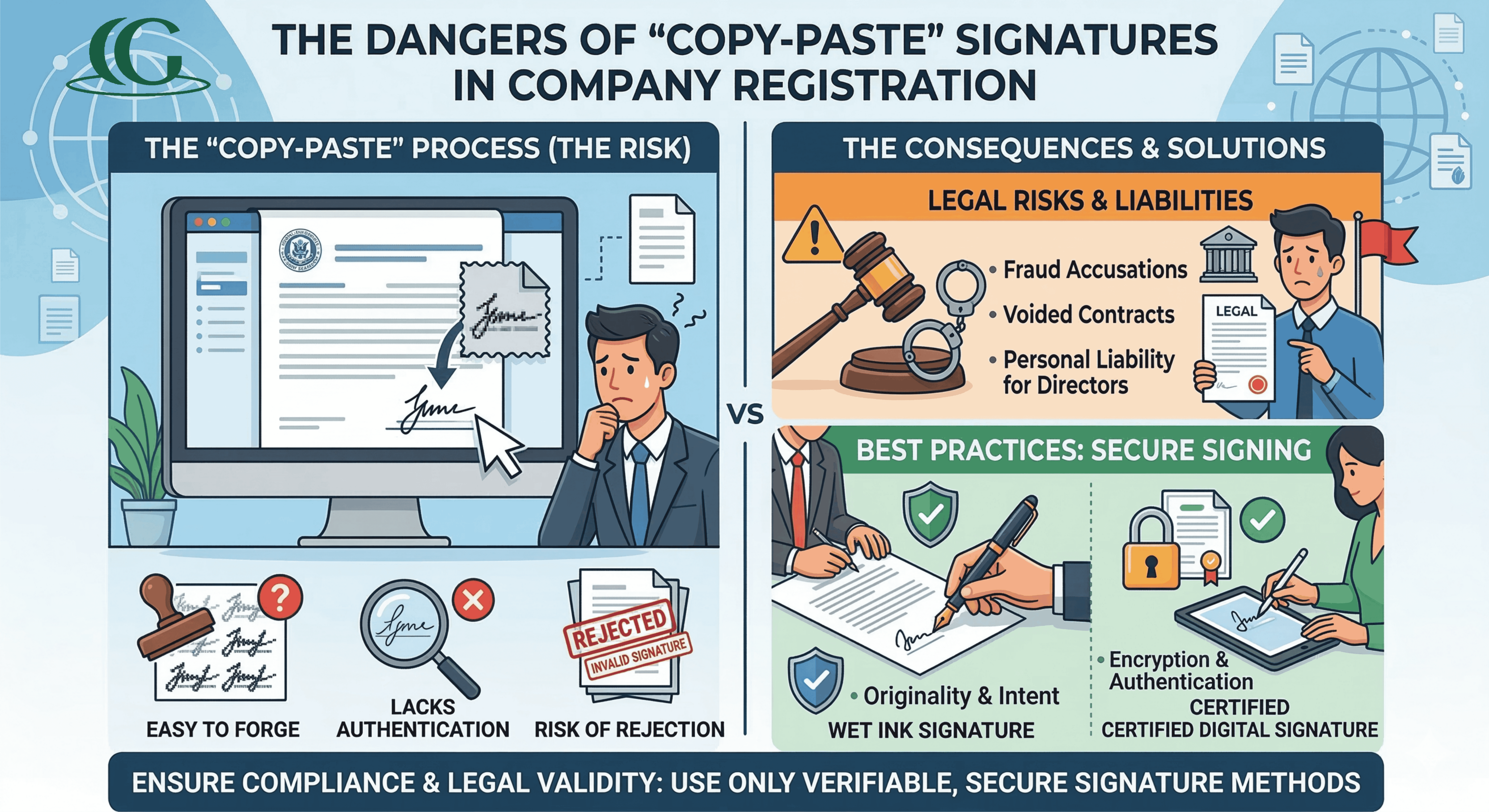
The MCA explicitly prohibits the use of tampered or digitally manipulated signatures. A "copy-paste" signature—where an image of a physical signature is superimposed onto a digital document—lacks the legal validity of a wet ink signature or a certified Digital Signature Certificate (DSC).
The Regulatory Crackdown
The CRC has become increasingly sophisticated in detecting manipulated documents. If an officer notices that a signature has been cropped and pasted:
Immediate Rejection: Your entire incorporation application (SPICe+ Part B) will be rejected instantly. As we have discussed in previous guides, this often means your DIN applications are also cancelled, forcing you to start from scratch.
Penal Provisions: The Companies Act, 2013, contains strict provisions against providing false information or using tampered documents. Using a manipulated signature can lead to a "Show Cause Notice" being issued to the promoters and the professional (CA/CS/CMA) certifying the form.
Blacklisting Risk: Repeated attempts to bypass the system with non-genuine signatures can lead to the directors' profiles being flagged, making future registrations much more difficult.
The Right Way: Wet Ink and DSC
To ensure your incorporation process remains smooth and legally sound, follow the established protocol:
Physical Signing: For documents that require a physical signature (like the subscriber sheet in certain scenarios), the subscriber must sign in wet ink. This document is then scanned in its entirety.
Digital Signature Certificates (DSC): For most electronic forms, the law requires a Class 3 DSC. This is a secure, encrypted way of signing that carries the same weight as a physical signature but with much higher security.
Witnessing: Remember that subscriber signatures must be witnessed by a professional or a designated individual who also signs the document. A copy-pasted signature makes it impossible for the witness to truthfully attest that the document was signed in their presence.
The Professional's Responsibility
It is not just the founder who is at risk. The professional certifying your forms (your Chartered Accountant or Company Secretary) is also legally responsible for the authenticity of the attachments. At Globaton, we perform a rigorous "Digital Integrity Check" on all subscriber sheets and attachments to ensure that every signature is genuine and properly placed.
Taking an extra ten minutes to sign a document properly can save you ten weeks of legal hurdles later.
Frequently Asked Questions
Is a scanned copy of my signature considered a "Copy-Paste" signature?
A scanned copy of a document that you signed in wet ink is perfectly legal. However, taking a small image of your signature and "pasting" it onto a different digital page is considered tampering and is illegal.
Can the MCA really tell if a signature was copy-pasted?
Yes. Modern PDF verification tools and the experienced eyes of CRC officers can easily detect inconsistencies in resolution, background color, or alignment that indicate a signature was superimposed rather than signed naturally.
What happens if my professional certifies a form with a pasted signature?
Both the directors and the certifying professional can face action under Section 447 and 448 of the Companies Act for "fraud" and "false statement." This can lead to fines and, in extreme cases, imprisonment.
Does this rule apply to LLPs as well?
Yes. The requirements for genuine signatures on the subscription sheet of the LLP Agreement and Form 9 are just as strict as those for private limited companies.
What is the best way to avoid this error?
Always sign your documents physically on the full sheet, or use a valid Digital Signature Certificate (DSC) as prescribed by the MCA. Never allow anyone to "fix" your documents by cropping and pasting your signature.