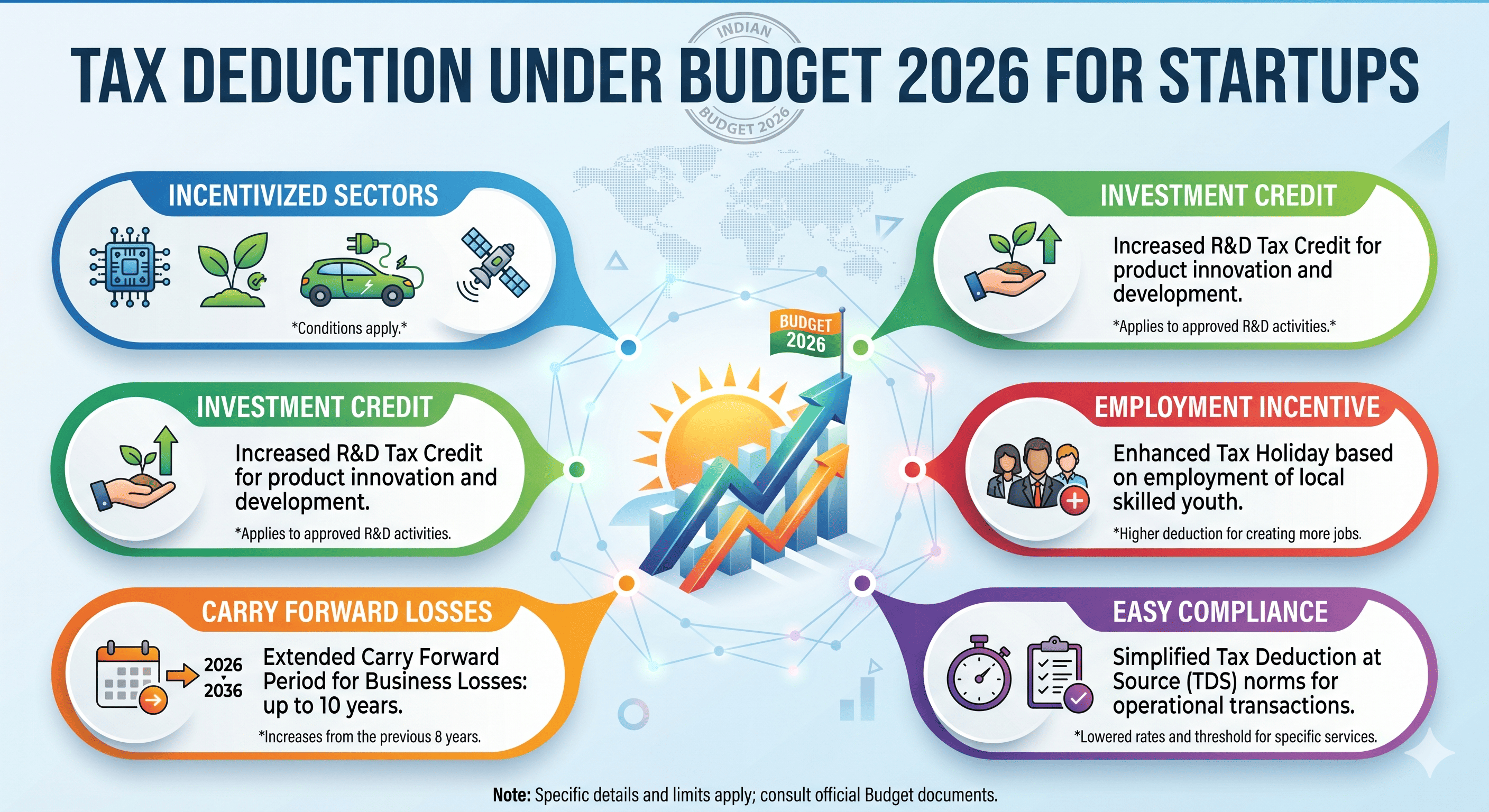
If you are running a start-up in India, you already know that tax season can feel like a storm of numbers, legal forms, and endless compliance rules. The presentation of the Union Budget always brings a mix of excitement and anxiety for founders.
The Union Budget 2026 has introduced some of the most significant changes we have seen in years, headlined by a brand-new Income Tax Act.
While tax updates might sound dry, they carry massive opportunities to save money, reinvest in your growth, and secure your financial runway. Let us dive into the key tax deductions, benefits, and changes that Budget 2026 brings to your start-up, and how working with professional business tax advisors can help you keep more of your hard-earned profits.
The Big News: The Brand-New Income Tax Act
The biggest talking point of Budget 2026 is the rollout of a completely redesigned Income Tax Act, which officially replaces the old 1961 law.
The government's goal is to simplify tax filing, reduce litigation, and make the rules easier to understand. However, any transition to a new tax regime means that the compliance playbooks are changing. Redesigned return forms are being introduced, and old administrative habits will need to be updated. This is where strategic tax planning services for start-ups become absolutely vital, helping you transition to the new tax system without a single stumble.
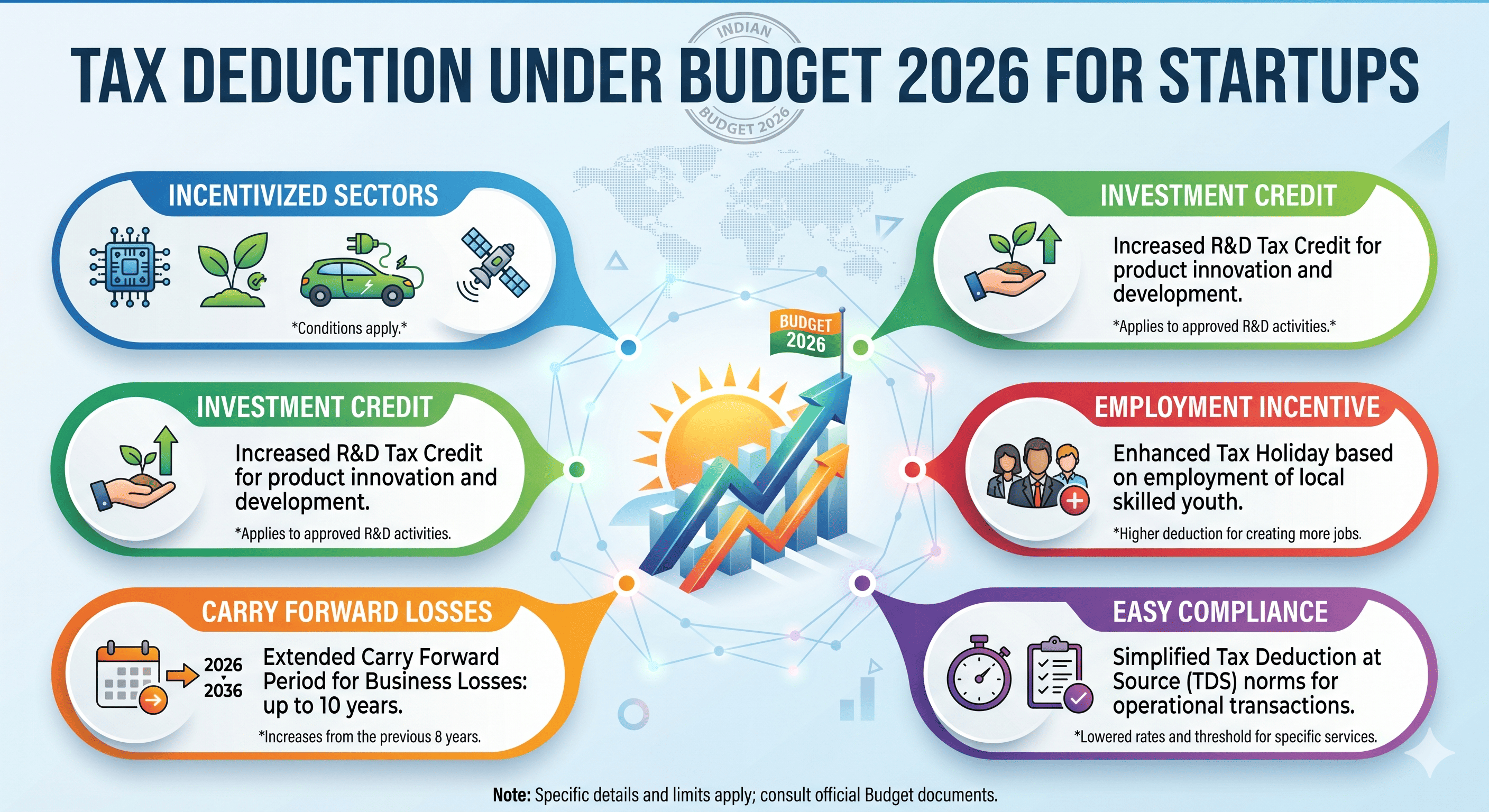
1. The Doubled DPIIT Turnover Limit: More Start-ups Qualify
To claim major tax exemptions in India, your start-up must be recognized by the Department for Promotion of Industry and Internal Trade (DPIIT).
In a massive win for growing businesses, Budget 2026 has doubled the annual turnover limit for DPIIT start-up recognition from 100 crore rupees to 200 crore rupees.
This change acknowledges that modern start-ups scale quickly but still need to reinvest their revenue into research and development. By raising this ceiling, the government has ensured that scaling companies can hold onto their start-up status, making them eligible for crucial tax exemptions, patent rebates, and government funding opportunities for a much longer period.
2. Unlocking the Section 80-IAC Tax Holiday
The holy grail of start-up tax deductions is Section 80-IAC of the Income Tax Act. This provision offers eligible start-ups a 100 percent tax holiday on their profits for three consecutive financial years out of their first ten years of operations.
Here is what you need to know about claiming this benefit:
● Choose Your Years Strategically: You do not have to claim this deduction immediately. It makes the most sense to select three consecutive years when your business has finally crossed the break-even point and is generating significant profits.
● The Inter-Ministerial Board (IMB) Hurdle: Simply having DPIIT recognition is not enough to claim the tax holiday. Your start-up must secure a separate certificate from the Inter-Ministerial Board. Because the evaluation involves a strict review of your business model's innovativeness, partnering with corporate tax advisory experts in India is highly recommended to build a strong, successful application.
3. Key Budget 2026 Tax Updates Every Founder Must Know
Aside from the major tax holidays, Budget 2026 introduced several targeted updates that will directly impact your cash flows and operational strategies.
Share Buybacks as Capital Gains
In the past, when a start-up bought back its own shares from shareholders, the transaction was taxed as a dividend. From April 1st, share buybacks are treated as capital gains instead. While this offers tax relief to non-promoter shareholders, promoters now face additional buyback taxes of 22 percent for corporate promoters and 30 percent for non-corporate promoters. If you are planning an equity exit or restructuring, consulting with business tax advisors is essential to map out the most tax-efficient route.
Extended Due Dates for Filing
Filing deadlines have been made slightly more founder-friendly. For businesses that do not require a mandatory tax audit, the due date for filing your tax returns has been extended to August 31st. Additionally, the deadline to file revised returns has been extended to March 31st of the subsequent year, giving you more breathing room to correct any accidental errors.
Decriminalisation of Minor Tax Mistakes
In a major push for the ease of doing business, the government has decriminalized minor and technical tax defaults, such as minor errors in Tax Deducted at Source (TDS) or late submission of minor documents. Instead of facing harsh penalties or prosecution, these defaults will now carry simple administrative fees, reducing stress for honest founders.
Why You Need a Dedicated Start-up Tax Consultant?
Tax laws are not static. With the launch of the new Income Tax Act, trying to manage your own taxes while building a product is a recipe for missed deductions and compliance errors.
Collaborating with specialized start-up tax consultants gives you a distinct competitive advantage:
● Customized Tax Planning: Experienced advisors help you structure founder salaries, optimize employee stock options (ESOPs), and claim R&D customs duty exemptions on critical components.
● Flawless Compliance: From TDS filings to GST and income tax returns, a professional firm ensures your books are audit-ready, keeping you attractive to venture capital investors.
● Strategic Growth Support: Professional advisors do not just look at past numbers; they help you plan your future cash flows so that tax liabilities never catch you off guard.
Build a Tax-Smart Start-up with Globaton
The tax benefits introduced in Budget 2026 are designed to reward innovation, ease compliance burdens, and keep more cash inside your business. However, unlocking these benefits requires a proactive approach and a deep understanding of the new legal landscape.
At Globaton, we act as your trusted partners in growth. Our team of business tax advisors and start-up consultants specializes in helping young companies navigate complex tax codes, secure DPIIT and IMB approvals, and structure their finances for maximum efficiency.
Let us handle the numbers while you change the world. Reach out to Globaton today for a comprehensive tax planning session tailored for your start-up.
Frequently Asked Questions
How does the brand-new Income Tax Act of 2026 affect my startup?
The rollout of the brand-new Income Tax Act under Budget 2026 is designed to simplify tax filings, reduce complex disputes, and make digital compliance faster. However, because old return formats and compliance processes are changing, startups must proactively review their tax practices. On the bright side, the government has doubled the annual turnover threshold for DPIIT startup recognition from 100 crore rupees to 200 crore rupees. This allows scaling startups to claim valuable tax exemptions, R&D credits, and patent subsidies for a much longer period.
How do we qualify for the Section 80-IAC three-year tax holiday?
To claim the massive 100% tax holiday on your business profits under Section 80-IAC, your startup must satisfy three main conditions: 1) It must be incorporated as a Private Limited Company or an LLP. 2) It must hold an active DPIIT recognition certificate. 3) It must secure a separate innovation certificate from the Inter-Ministerial Board (IMB). Because the IMB evaluates the uniqueness, technology integration, and scalability of your business model very closely, collaborating with dedicated business tax advisors is essential to build a bulletproof application.